
LIVING MATERIALS PACZESNY LAB


Team
We are using chemistry, biology, and physics mixed together to obtain a new quality of research on bio-inspired, functional nanomaterials.
Our Work
Our lab aims to establish a two-way connection between the biology and chemistry of materials. We attempt to be clever in our work to answer important questions and not to be “equipment oriented”. For team members, the work in the lab should be a way to reach scientific excellence.
Job offers
We are always looking for students who are willing to work hard on their bachelor's or master's thesis in our group. There are also open positions for internships.
News and Succeses

April 2026
We are a bit late with reporting our latest publications here.
Self-Assembled Phenylalanine-Derived Metabolites as Potential Neurotoxic Amyloids in Phenylketonuria
Neelam, Pooja Sharma, Prabhjot Singh, Nataliia Atamas, Mohinder Kaur, Amit Dubey, Jan Paczesny, Vinod Kumar, Rohit K Sharma, Nishima Wangoo
ACS Chemical Neuroscience, 2026, https://doi.org/10.1021/acschemneuro.5c00403
Karol Postrożny, Bartosz Kamiński, Aleksandra F Koper, Roman Luboradzki, Zahra Badri, Jan Paczesny, Mykhaylo A Potopnyk
The Journal of Organic Chemistry, 2026, 91, 15, 5366–5378, https://doi.org/10.1021/acs.joc.6c00212
Bioactive Copper-Doped Natural Hydroxyapatite Quantum Dots/Graphene Oxide Nanocomposites in 3D-Printed PCL Scaffolds for Superior Osteogenic and Angiogenic Performance in Bone Tissue Engineering
Hossein Maleki‐Ghaleh, Jan Paczesny, Fatemeh Shahriyari, Mehdi Khanmohammadi, Wojciech Święszkowski, Marina Volpi, Ali Fallah, Ziba Dargahi, Pooriya Khademi‐Azandehi, Rafał Zbonikowski, Ali Zarrabi, M Hossein Siadati, Ali Akbari‐Fakhrabadi, Khosro Adibkia
Advanced Healthcare Materials, e03939, https://doi.org/10.1002/adhm.202503939

April 2026
On April 27–29 of this year, Rafał Zbonikowski conducted a workshop titled “At the Interface of Physics and Chemistry – How to Build Nanorobots?” during a multidisciplinary science camp for high school students in Falenty, organised by Fundusz ZDOLNI.
Fundusz ZDOLNI is an organisation operating since 1983 that brings together talented young people passionate about science and the arts, providing them with opportunities to connect with scientists from leading research institutions in Poland (https://fundusz.org/).
April 2026
We said farewell to Ziba and Hossein, who are moving to Munich for the next stage of their scientific and professional journey.
Ziba and Hossein have been valued members of our team, contributing not only to our research but also to the friendly and collaborative atmosphere of the Living Materials group. We are grateful for their work, energy, and presence in the lab.
Thank you, Ziba and Hossein, for being part of our group. We wish you all the best in Munich and look forward to staying in touch!

March 2026
We are pleased to share that our paper “Array-based polymer-phage biosensors for detection and differentiation of bacteria” has been included in the Royal Society of Chemistry themed collection “Celebrating International Women’s Day 2026: Women in Sensing and Diagnostics”.
The collection, published by Sensors & Diagnostics, highlights research contributions from women working in sensing and diagnostic science. The RSC collection includes 43 articles showcasing the diversity and quality of current research in the field.
Our featured paper was authored by Enkhlin Ochirbat, Junwhee Yang, Aritra Nath Chattopadhyay, Jungmi Park, Mingdi Jiang, Jan Paczesny and Vincent M. Rotello. The article presents an array-based polymer-phage biosensing approach for detecting and differentiating bacteria, addressing challenges posed by pathogenic bacteria such as MRSA.
March 2026
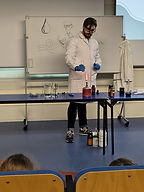
On 18 March 2026, scientists from Team 2 (Dr Konrad Giżyński and Dr Bartłomiej Bończak) and Team 10 (Dr Ewelina Kalwarczyk and Dr Tomasz Kalwarczyk) of the Institute of Physical Chemistry of the Polish Academy of Sciences organised interactive science demonstrations for two third-grade classes from Primary School No. 369 in Warsaw. During the visit, the students participated in hands-on chemistry and physics experiments illustrating how scientists detect pollutants in water and how different processes can help remove them.
The demonstrations were inspired by research carried out within the STARDUST project (Grant No. WATER4ALL/I/20/STARDUST/2024) funded under the Water4All Partnership programme, which focuses on developing advanced optical methods for monitoring water quality. Through simple experiments tailored to students' ages, we demonstrated how real scientific research on water contamination and purification can be translated into engaging educational activities.

February 2026
Members of the Living Materials group presented their research during the IChF Microsymposium, one of the key annual scientific events of the Institute of Physical Chemistry, Polish Academy of Sciences. The meeting took place on February 9–10, 2026, and brought together researchers from across the Institute and ICTER to discuss recent results, exchange ideas, and strengthen scientific collaboration within the IChF community.
The programme included invited talks and two poster sessions covering research groups and laboratories from across the Institute. Enkhlin Ochirbat gave an oral presentation entitled “Array-based polymer-phage biosensors for detection and differentiation of bacteria”. During the poster session, Bartłomiej Bończak presented the poster “Engineering nanoparticles-based and polymer-based anti-phage materials”, while Aleksander Piasecki and Konrad Giżyński presented “Interplay of Electric and Magnetic Interactions in Field-Driven Particle Assembly”.
The Microsymposium is a long-standing IChF tradition and a space for scientific discussion, curiosity, and exchange of ideas. We are happy that members of our team contributed to this year’s edition by presenting research at the interface of soft matter, functional materials, biointerfaces, and antimicrobial technologies.

February 2026
On 17 February 2026, scientists from Team 2 (Dr Konrad Giżyński and Dr Bartłomiej Bończak) and Team 10 (Dr Ewelina Kalwarczyk) of the Institute of Physical Chemistry of the Polish Academy of Sciences organised interactive science demonstrations for first-grade primary school students. The children took part in simple chemistry and physics experiments focused on detecting and removing pollutants from water.
The activities were inspired by the STARDUST project (Grant No. WATER4ALL/I/20/STARDUST/2024) funded under the Water4All Partnership programme, which focuses on developing optical methods for water quality monitoring. This allowed us to translate real research on water purification and contamination detection into age-appropriate, hands-on demonstrations.

February 2026
Congratulations to Aleksandra Zacheja, who has successfully defended her engineering thesis entitled “Wpływ naturalnego rozpuszczalnika głęboko eutektycznego mentol:tymol (1:1) na inaktywację bakteriofagów” and graduated with a Bachelor of Engineering in Bioengineering. Bartek Kamiński supervised Ola`s work in the lab.

February 2026
Congratulations to Kaciaryna Rudko, who has successfully defended her engineering thesis entitled “Influence of nanoparticles’ shape on their antimicrobial properties” at SGGW, Faculty of Biology and Biotechnology. Jan Paczesny acted as supervisor.

January 2026
Jan Paczesny participated in the 1st PhotoBrane & Interfaces4Life Network Meeting, held on January 12–16, 2026 at the Leibniz Institute of Photonic Technology in Jena, Germany. The Institute of Physical Chemistry, Polish Academy of Sciences joined PhotoBrane as an associated partner.
PhotoBrane is a Marie Skłodowska-Curie Actions Doctoral Network dedicated to photo-tuning membranes for molecular separation. The network brings together academic and industrial partners working across synthetic chemistry, photochemistry, computational chemistry, and membrane technology.

December 2025
We end the year with another paper. Konrad Giżyński became a co-author in a paper:
A comprehensive toolkit for manipulation and analysis of sprouting capillary networks based on magnetic ordering of multiple EC-coated microcarriers and their use in tissue modelling and drug testing
Katarzyna Olga Rojek, Antoni Wrzos, Fabio Maiullari, Konrad Gizynski, Maria Grazia Ceraolo, Claudia Bearzi, Roberto Rizzi , Piotr Szymczak, Jan Guzowski
Lab Chip, 2026
https://pubs.rsc.org/en/Content/ArticleLanding/2026/LC/D5LC00664C

December 2025
We are pleased to announce that Aleksandra Zacheja was awarded first place in her category at the 52nd Review of Achievements of the SGGW Student Societies (2025).
The jury highly appreciated the application potential of her work, highlighting its innovative character and promising prospects for practical use.

December 2025
Our 2024 Small paper was awarded during IChF`s competition for best paper! Congrats!
Visible Light‐Sensitive Sustainable Quantum Dot Crystals of Co/Mg Doped Natural Hydroxyapatite Possessing Antimicrobial Activity and Biocompatibility
Maleki‐Ghaleh, H.; Kamiński, B.; Moradpur‐Tari, E.; Raza, S.; Khanmohammadi, M.; Zbonikowski, R.; Sadegh Shakeri, M.; Siadati, M. H.; Akbari‐Fakhrabadi, A.; Paczesny, J.
Small, 2024, 2405708 (IF=13)
DOI: 10.1002/smll.202405708

November 2025
We are pleased to announce that one of the candidates secured a postdoctoral position within the Ulam NAWA 2025 Programme in our group. This result places us among the host institutions selected in the latest edition of the programme, which supports the international mobility of outstanding researchers and strengthens the internationalisation of Polish science.
The awarded postdoctoral fellowship will enable the implementation of advanced research carried out by an incoming researcher from abroad, contributing to the development of our scientific activities and international collaborations.

November 2025
We successfully secured funding within the SHENG project! We will start our Polish-Chinese project in February 2026.

November 2025
Together with a group led by Prof. Piyush Sharma, we successfully published another paper. Congratulations!
Targeted inactivation of bacteriophages by polypyrrole nanoparticles
Sada Raza, Dominik Korol, Enkhlin Ochirbat, Bartosz Kamiński, Maciej Cieplak, Piyush Sindhu Sharma, Jan Paczesny
Materials & Design, 260, 2025, 115204

November 2025
Aleksander Piasecki, a master's student in the group, received the Rector's Scholarship of the Warsaw University of Technology. Congrats!

November 2025
We welcome Jarosław Pankowski, PhD, to the group. Jarosław is a postdoc working on microbiology projects within the OPUS project.

November 2025
Jan Paczesny delivered the opening lecture at the 54th National School of Chemistry “XeON”, held on 7–11 November 2025 in Karpicko near Wolsztyn. The event was organised by the Chemistry Students’ Scientific Society of the Faculty of Chemistry at Adam Mickiewicz University (UAM) and brought together young chemists from across Poland.
As part of its involvement, the Institute of Physical Chemistry PAS (IChF) co-funded an award for the best student research presentation, supporting excellence and early-stage scientific careers.
The School is closely connected with the activities of the Akademickie Stowarzyszenie Studentów Chemii (ASSChem), an informal nationwide association founded in 1994, uniting chemistry student scientific societies from universities across Poland and fostering collaboration, knowledge exchange, and scientific development among young researchers. Jan Paczesny attended the 27th and 28th Schools as a student.

October 2025
Sada Raza defended (with honors) her PhD thesis entitled "Inactivation of bacteriophages". She started in the middle of the pandemic, settled in Poland, became a mom, and still made it on time. Congratulations!

October 2025
Diana Szymielewicz joined the team as an intern. She will work for two months on the stability of bacteriophages.

September 2025
We are happy to announce that Hossein has coauthored another paper!
Nanostructured HAp–Ta₂O₅–MWCNT coatings on Ti-6Al-4 V by plasma electrolytic oxidation: A novel approach for advanced biomedical implants
Milad Hosseini, Jafar Khalil-Allafi, Yousef Ahmadkhanpour, Hossein Maleki-Ghaleh
Surfaces and Interfaces, 73, 2025, 107588

September 2025
We are pleased to announce the results of the “Young Researchers IChF PAN” competition. Four group members were awarded!
Laureates in the category of young researchers with a doctoral degree: Katarzyna Rojek, Emilia Witkowska-Nery, Hossein Maleki Ghaleh, Magdalena Wiloch, Mateusz Pielach, Kamila Łępicka, Bartłomiej Bończak, Agata Błaziak, Faria Khan, Mykola Kravets.
Laureates in the category of PhD students: Muhammad Ans, Joanna Kruszyńska, Marek Czarnota, Aneta Magiera, Klaudia Staśkiewicz, Rafał Zbonikowski, Katarzyna Dusiło, Vishnu Anilkumar, Elżbieta Jarosińska, Sada Raza.
Warm congratulations to all the awardees!
September 2025
New papers from the group! Congrats to all authors.
Rafał Zbonikowski, Asghar Aryanfar, Michalina Iwan, Martin Presselt, Jan Paczesny
The Journal of Physical Chemistry C 129 (29), 13406-13419 (IF=3.2)
https://pubs.acs.org/doi/full/10.1021/acs.jpcc.5c02555
The internal energy as a function of state parameters in steady and unsteady Poiseuille flows
Konrad Giżyński, Karol Makuch, Jan Paczesny, Paweł Żuk, Anna Maciołek, Robert Hołyst
Journal of Non-Equilibrium Thermodynamics, 2025 (IF=4.2)
https://doi.org/10.1515/jnet-2025-0003
Green Tea Anti-Acanthamoeba Activity Regulated by Silver Nanoparticles
Ludmiła Szewczak, Mateusz Grotek, Julita Nowakowska, Mateusz Wdowiak, Jan Paczesny, Maria Doligalska
Parasitological Science, 2025
https://www.sciltp.com/journals/parsci/articles/2508001071

September 2025
The "Living Materials" Group members participated in the 2025 Fall Meeting of the European Materials Research Society (E-MRS) that took place from September 15 to 18, 2025, at the main campus of the University of Technology in Warsaw (Poland).
Symposium N "Thin Film, Flexible and Composite Materials and Their Formation Techniques: Synthesis and Characterization of Functional Nano Composite Material"
* Jan Paczesny - invited talk "Nanomaterials for Antimicrobial and Antiviral Applications: From Surface Engineering to Selective Biocontrol"
* Bartek Bończak - talk "Engineering nanoparticles-based and polymer-based anti-phage materials"
* Bartek Kamiński - talk "Illuminating Antimicrobial Defense: Quantum Dot Hydroxyapatite Nanoparticles with Light Sensitivity and Antimicrobial Properties"
Symposium S "Electronic, Photonic, Nano, Low-Dimensional and Quantum Materials Nanomaterials of the Future: Advancements in Energy and Sensing"
* Jan Paczesny - talk "From unusual building blocks to responsive 2D systems at the air/water interface"
* Enkhlin Ochirbat - talk "Array-based Polymer-Phage Biosensors for Detection and Differentiation of Bacteria"
Symposium T "Electronic, Photonic, Nano, Low-Dimensional and Quantum Materials Smart Materials for Nanoelectronics - Nanophotonics & European Doctorate Network: Pcam (Physics And Chemistry of Advanced Materials) Summer School 2025"
* Gunjan Tiwari - talk "A finer approach towards 1D microparticle chains formation: methods, mechanisms, and applications"
Posters
* Natalia Szczepańska - "Inorganic nanolayers of noble metals and their compounds"
* Ziba Dargahi - "Sonochemical Synthesis of Cobalt-Doped BaTiO_ Nanoparticles for Enhanced Visible-Light Photocatalysis"
* Hossein Maleki Ghaleh - "Magnetopiezoelectric Biopolymer Nanocomposites with Quantum Dot Crystals: A Novel Approach for Neural Tissue Engineering"
Bartek Bończak received an award for the best oral presentation. Congrats!